

Safety Gear for Skating and Snowboarding
Table of Contents
- Why Safety Gear Matters for Skating and Snowboarding
- Skateboarding Safety Gear Essentials
- Snowboarding Protective Gear Requirements
- How to Get the Right Skating Helmet Fit
- Fitting and Adjusting Your Protective Gear
- When to Replace Helmets and Protective Pads
- Frequently Asked Questions
Last Updated: October 14, 2026
Why Safety Gear Matters for Skating and Snowboarding
Injuries happen fast when you're moving at speed. A fall from a skateboard or a wipeout on the slopes can result in head trauma, broken wrists, or damaged knees in seconds. That's why safety gear for skating and snowboarding isn't optional, it's the difference between walking away with a story and walking away in an ambulance.
At Cal Surf, we've worked with skaters and snowboarders for nearly four decades, and the pattern is clear: riders who wear protective equipment recover faster and suffer fewer serious injuries. The gear itself has evolved dramatically. Modern helmets, wrist guards, and knee pads are lighter, more breathable, and more comfortable than they were even five years ago. That means the old excuse, "it's too hot" or "it's too restrictive", doesn't hold anymore.

The right protective setup depends on what you're doing. A skateboarder needs different protection than a snowboarder. A beginner needs different gear than someone hitting advanced terrain. This guide breaks down exactly what you need for each activity, how to fit it properly, and when to replace worn-out equipment.
Skateboarding Safety Gear Essentials
Skateboarding puts you at risk for falls onto hard pavement or concrete. Your head, wrists, knees, and elbows take the brunt of impact. The protective gear setup is straightforward, but each piece matters.
Helmet Selection for Skateboarding
A skateboarding helmet must meet specific safety standards. In the United States, helmets should comply with the U.S. CPSC Safety Standard for Bicycle Helmets for Persons Age 5 and Older or ASTM F-1492 skate safety standards. These standards test how well a helmet absorbs impact energy without cracking or shifting during a fall.
The Certified Sweatsaver helmets by Triple 8 we carry at Cal Surf meet both CPSC and ASTM F-1492 standards. They feature dual-density foam, a hard outer layer that absorbs initial impact and a softer inner layer that cushions your head. The plush Sweatsaver fabric keeps sweat away from your face and eyes, which matters when you're practicing tricks for hours. The helmet comes with two sets of liners so you can customize the fit as needed.

A proper skateboarding helmet should sit level on your head, covering your forehead without tilting forward or backward. The straps should form a V-shape under your ears, and you should be able to fit one finger between the strap and your chin. If you can fit more than one finger, the helmet is too loose. If you can't fit any fingers, it's too tight.
Knee, Elbow, and Wrist Protection
Wrist guards are critical for skateboarders. When you fall, your instinct is to catch yourself with your hands. Wrist guards with rigid splints prevent the wrist from bending backward, which is how wrist fractures happen. Look for guards with removable splints on the top and bottom of the wrist, and wide straps that hold everything in place without cutting off circulation.
Knee pads and elbow pads protect the joints that absorb impact when you slide across pavement. Choose pads with gel or foam cushioning on the impact zones. The straps should be adjustable so the pads stay in place during falls. Pads that slip during a fall are worse than useless, they leave you unprotected and distracted.
A complete protective gear set for skateboarding typically includes a helmet, wrist guards, knee pads, and elbow pads. Some riders add additional hand protection or sliding gloves if they practice slides. The key is coverage without sacrificing mobility. You need to be able to move your joints and balance on the board.
Snowboarding Protective Gear Requirements
Snowboarding injuries differ from skating injuries. You're moving faster, often on ice or hard-packed snow, and you're at altitude. Wrist injuries are the most common snowboarding injury, accounting for a significant share of slope accidents (ncbi.nlm.nih.gov). Head injuries are less common than in skateboarding but more serious when they happen because of the speed involved.
Head and Wrist Protection on the Slopes
A snowboarding helmet needs to meet EN 1077B or ASTM 2040 standards, which test for impact protection at higher speeds than skateboarding helmets. Snowboarding helmets are also built to work with goggles and to provide better ventilation since you're wearing heavy layers underneath.
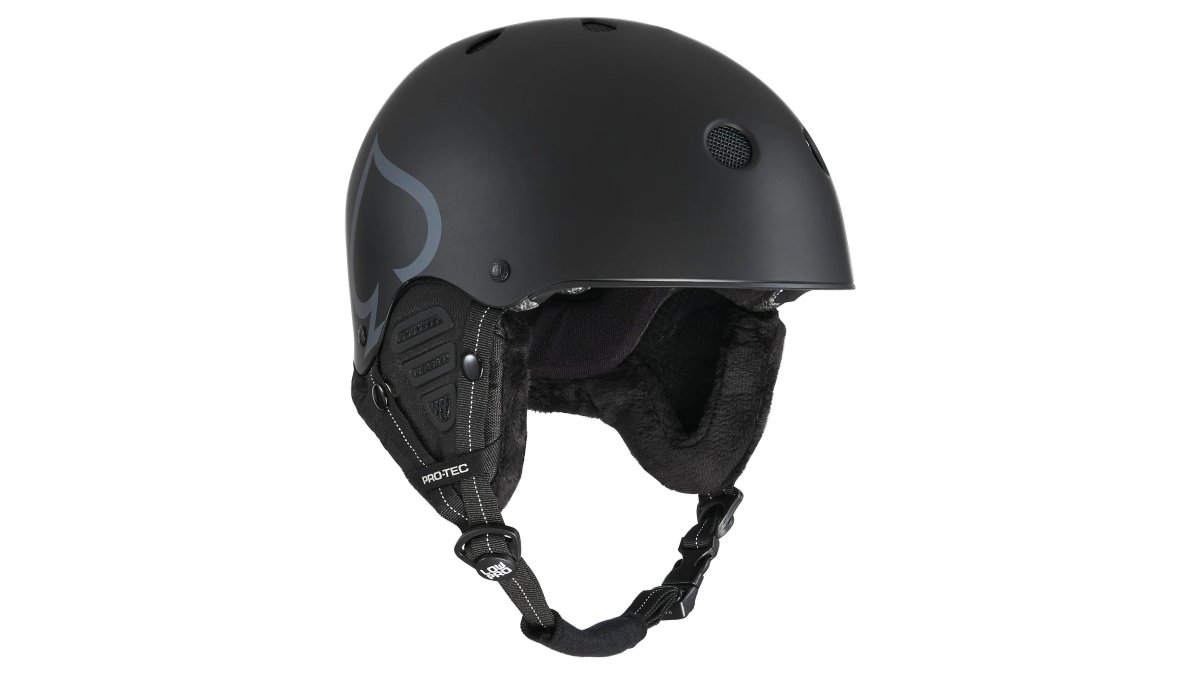
The Low Pro Snow Helmet by Pro-Tec we stock at Cal Surf features a SLIMTECH CORE with EPS Matrix Foam that's 22% thinner than standard helmets, giving you a deeper, more secure fit.

Wrist injuries on the slopes happen when you catch an edge and fall backward or sideways. Your instinct is to brace your fall with your hands, and your wrist bends backward under your body weight plus momentum.
The Undercover Snow Wrist Guards we carry are built with perforated neoprene for breathability and include removable splints that provide solid support. They're slim enough to fit under most snowboard gloves and include an EZ pull-on loop so you can get them on quickly.
Undercover Snow Wrist Gaurds →
How to Get the Right Skating Helmet Fit
A helmet that doesn't fit properly won't protect you. Too loose and it shifts during impact. Too tight and you won't wear it. The fit process takes two minutes and makes the difference between protection and a false sense of security.
Start by measuring your head circumference at the widest point, just above your eyebrows. Most helmets come in sizes XS, S, M, L, and XL. If your measurement falls between two sizes, size up.
Put the helmet on and make sure it sits level on your head. It should cover your forehead without tilting forward or backward. The front of the helmet should sit about one inch above your eyebrows. If it's tilting, adjust the back padding until it's level.
Fasten the chin strap and tighten it so you can fit exactly one finger between the strap and your chin. This gives you enough room to breathe and talk but keeps the helmet from shifting if you fall.
Try moving your head side to side and forward and backward. The helmet should move with your head, not slide around. If it slides, tighten the padding or try a smaller size.
Fitting and Adjusting Your Protective Gear
Protective pads and guards need to be snug but not restrictive. A pad that's too loose will shift during a fall and leave you unprotected. A pad that's too tight will cut off circulation and make you uncomfortable, which means you won't wear it.
For knee pads and elbow pads, the padding should sit directly over the joint. Put on the pad and bend your joint. The padding should stay in place and move with your leg or arm. If it shifts, tighten the straps. If it restricts your movement, loosen the straps or try a larger size.
Wrist guards should be snug around your wrist and forearm. The splints should sit on the top and bottom of your wrist, not on the sides. If the splints are on the sides, they won't prevent your wrist from bending backward during a fall.
Most protective gear comes with adjustable straps using Velcro or dial systems. Dial systems are faster and easier to adjust on the fly. Velcro straps are cheaper but wear out over time as the hook-and-loop material degrades. Either way, check your straps before every session.
When to Replace Helmets and Protective Pads
A helmet that's taken a hard impact should be replaced, even if it looks fine. The foam inside is designed to crush during impact, and that crushing absorbs the energy that would otherwise go to your head.
Even without a major impact, helmets degrade over time. UV exposure breaks down the outer shell. Sweat and moisture break down the foam. Most helmets last 3 to 5 years with regular use.
Protective pads last longer than helmets because they don't take direct impacts the same way. However, the straps wear out, the padding compresses, and the protective shell can crack.
Inspect your gear before every session. Check that straps are intact, padding is in place, and shells aren't cracked. A few seconds of inspection can prevent you from riding with compromised protection.
Gear Type |
Lifespan |
Signs of Wear |
Replacement Trigger |
|---|---|---|---|
Helmet |
3-5 years |
Cracks, compressed foam, loose padding |
Any significant impact to the head |
Wrist Guards |
2-4 years |
Loose straps, cracked splints, compressed padding |
Splints no longer rigid or straps won't stay tight |
Knee/Elbow Pads |
2-4 years |
Loose straps, thin padding, cracked shells |
Pads slip during movement or padding feels flat |
Protective Sets |
Varies by use |
Individual pieces wear at different rates |
Replace individual pieces as needed |
Protecting yourself while skating or snowboarding doesn't have to mean sacrificing comfort or style. Modern protective gear is lighter, more breathable, and more comfortable than ever.
At Cal Surf, we stock protective gear designed for both skateboarding and snowboarding, including The Certified Sweatsaver helmets for skateboarding and Low Pro Snow Helmets for the slopes. We also carry Undercover Snow Wrist Guards built specifically for snowboarding.
Frequently Asked Questions
How should a helmet fit for skating or snowboarding?
A helmet should sit level on your head, covering your forehead without tilting back or forward. Place two fingers under your chin strap when fastened—there should be snug contact without choking. The helmet shouldn't move when you shake your head. For skateboarding, ensure it meets CPSC and ASTM F-1492 standards. For snowboarding, look for EN 1077B or ASTM 2040 certification. If measurements fall between sizes, size up for comfort and safety.
Do you need wrist guards for skating?
Yes, wrist guards are essential for both skating and snowboarding. Wrist injuries rank among the most common in these activities. Wrist guards with removable splints provide solid support while staying comfortable and breathable. Choose guards that fit snugly under your gloves or skating gear. Neoprene construction offers flexibility without sacrificing protection, and perforated designs improve breathability during active sessions.
How do you know when to replace a helmet or protective pads?
Replace a helmet after any significant impact, even if damage isn't visible—internal foam may be compromised. Inspect helmets yearly for cracks, dents, or deteriorating straps. Replace pads when foam becomes compressed, straps fray, or cushioning feels thin. Check for moisture damage and mold in breathable materials. If protective gear no longer fits securely or feels uncomfortable, replacement ensures you stay properly protected during your activities.