

Choosing the Right Trucks and Wheels for Your Skateboard
Table of Contents
- Understanding Truck and Wheel Basics
- Matching Truck Width to Deck Width
- Truck Height: Low, Mid, and High Options
- Truck Wheel and Tire Fit Essentials
- Truck Wheel Offset Explained and Why It Matters
- Truck Wheel Bolt Pattern and Load Rating
- Choosing Wheels to Suit Your Skateboard Setup
- How Riding Style and Weight Affect Your Choices
- Frequently Asked Questions
Last Updated: October 11, 2026
Understanding Truck and Wheel Basics
Picking the right trucks and wheels for your skateboard shapes everything about how your board rides. The truck size, wheel diameter, and hardness work together to determine your turning radius, stability, and how your board handles different surfaces.
What truck size means for your deck
Truck axle width should match your deck width within a quarter inch. If your deck is 8 inches wide, use an 8-inch axle truck. Wheels should sit roughly flush with deck edges, too wide feels unstable, too narrow feels twitchy.
Wheel diameter, hardness, and how they affect your ride
Wheel size (48-60+mm) and hardness (durometer 78a-104a) work together. Larger wheels roll faster; smaller wheels make tricks easier. Softer wheels grip rough surfaces; harder wheels slide on smooth ones. The Spitfire Bighead 52mm 99A wheels hit a versatile middle ground for most street skaters.

Matching Truck Width to Deck Width
Your deck width and truck axle width should be within a quarter inch of each other. If your deck is 8.25 inches wide, look for a truck with an 8.25-inch axle.
The skateboard setup guides confirm that alignment prevents wheel bite and keeps your board stable. Mismatched widths throw off your use and make turning feel wrong.
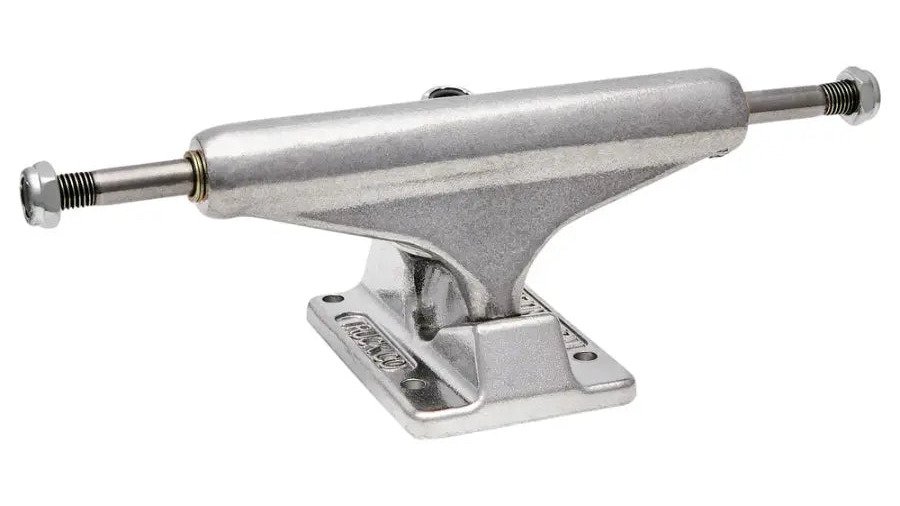
Axle width is the key measurement. The Stage 11 129mm truck from Cal Surf, for example, has a specific axle width that works for standard street decks in that size range.

Independent Stage 11 129 Polished Truck
Truck Height: Low, Mid, and High Options
Low trucks (under 2 inches) lower your center of gravity for easier tricks but increase wheel bite risk. Mid trucks (2.0-2.25 inches) balance stability and clearance, most street skaters use these. High trucks (over 2.25 inches) provide clearance for larger wheels and rough ground but feel less stable for technical tricks.
How truck height affects wheel clearance and wheel bite
Wheel bite occurs when your wheel touches the deck during a hard turn. Low trucks with large wheels bite easily; high trucks with large wheels clear fine. If you hear contact, use higher trucks, smaller wheels, or riser pads.
Truck Wheel and Tire Fit Essentials
Wheel clearance is the intersection of three variables: wheel diameter, truck height, and deck flex. Understanding how they interact prevents wheel bite and ensures your setup performs as intended.
Measuring clearance before you ride
Before assembling, measure the gap between wheel and deck at full turn: assemble trucks and wheels loosely, turn fully in both directions, and measure the gap at the closest point, you want at least 1/8 inch. If contact occurs, switch to smaller wheels, use higher trucks, or add riser pads.
Wheel diameter and truck height combinations
Not all wheel sizes work with all truck heights. Here are the practical pairings:
50mm wheels work with any truck height. 52-54mm wheels work best with mid to high trucks; low trucks risk bite. 56-58mm wheels need high trucks or riser pads. 60mm+ wheels require high trucks and usually riser pads.
Using riser pads to solve clearance problems
Riser pads sit between baseplate and deck, adding 1/8-1/2 inch clearance. Use them when you want bigger wheels (54-56mm) with mid-height trucks. They raise your center of gravity slightly and may reduce direct response, but the trade-off is worth it for preferred wheel size. Install under the baseplate using longer bolts.
Checking for other clearance issues
Watch for grip tape catching the wheel (sand the edge), bushings hitting the deck (tighten kingpin or use stiffer bushings), and axle nut rubbing (loosen until wheel spins freely). Once clearance is confirmed, tighten your kingpin to your preferred turning feel.
Truck Wheel Offset Explained and Why It Matters
Offset refers to where the wheel's core sits relative to the outer edge. This affects how your wheel contacts the ground and how your truck turns.
Most skateboard wheels use a standard offset that works with standard trucks. You don't usually need to think about offset unless you're building a very specific setup or running specialty wheels.
The key is making sure your wheel and truck are compatible. Check the product specs if you're mixing brands or building something unusual. Standard wheels on standard trucks just work.
Truck Wheel Bolt Pattern and Load Rating
Understanding truck wheel load rating for your weight and style
Your weight and riding style determine how much stress your trucks and wheels take. Heavier skaters need stronger trucks and more durable wheels.
Most quality trucks handle riders up to 200 pounds without issue. If you're heavier, look for trucks with reinforced baseplates. Wheels also have weight limits, though most standard wheels work for riders under 250 pounds.
Your riding style matters too. Aggressive tricks and high-speed cruising stress your setup differently. Street skating with lots of tricks puts more pressure on your trucks than casual cruising.
Cal Surf stocks trucks and wheels built for real skating. The Independent Stage 11 truck and Spitfire wheels are designed to handle street skaters of all weights and skill levels.
Choosing Wheels to Suit Your Skateboard Setup
The right wheels depend on where you skate and what you do on your board. Street wheels are different from cruiser wheels, which are different from transition wheels.
Wheel size selection by riding style
Street skating uses 50-54mm wheels. Smaller wheels are lighter and make tricks easier. Larger wheels in this range roll a bit faster and handle small cracks better.
Cruising uses 54-60mm wheels. Bigger wheels roll faster and smooth out bumps. They're heavier but give you more speed with less effort.
Transition and park skating uses 52-56mm wheels. You need enough size to keep rolling but not so much that tricks get heavy.
The Spitfire Bighead 52mm wheels work across all these styles. They're a solid all-around choice if you're not sure what you want yet.
Wheel hardness and durometer for different surfaces
Soft wheels (78a-87a) grip rough ground and smooth out vibration. Use them on rough pavement, crusty spots, or cruising where comfort matters.
Medium wheels (88a-95a) balance grip and slide. They work on most surfaces and are good for learning.
Hard wheels (96a-104a) slide easier and are faster on smooth ground. Use them on smooth concrete, skate parks, or when you want to slide tricks.
The 99a durometer on Spitfire Bighead wheels puts you in the medium-hard range. That's versatile enough for street spots and smooth parks.
How Riding Style and Weight Affect Your Choices
Your weight and riding style determine which trade-offs make sense for your setup. The same truck-and-wheel combination that feels perfect for one skater may feel sluggish or unstable for another.
Understanding the core trade-offs
Every setup involves compromises. Understanding them helps you choose what matters most:
Stability vs. trick responsiveness: Lower trucks and smaller wheels make tricks easier but feel less stable at speed. Higher trucks and larger wheels feel planted but add weight to your flips.
Speed vs. control: Larger wheels and harder durometers roll faster but require more effort to stop and are harder to lock in for tricks. Smaller wheels and softer durometers are slower but give you more control.
Comfort vs. performance: Softer wheels and higher trucks smooth out rough ground but reduce the direct feel of the board. Harder wheels and lower trucks give you more feedback but transmit more vibration.
Clearance vs. ground feel: Higher trucks and riser pads prevent wheel bite but raise your center of gravity. Lower trucks bring you closer to the ground but increase bite risk.
Know which trade-off matters most to you before you buy.
Setup recommendations by weight and riding style
Street skaters under 150 pounds: You can run low trucks (under 2 inches) with 50-52mm wheels.
Street skaters 150-200 pounds:Mid trucks (2.0-2.25 inches) with 52-54mm wheels are the sweet spot. This is the most versatile range.
Street skaters over 200 pounds: Mid to high trucks (2.25+ inches) with 54mm wheels.
Cruisers and casual riders: High trucks (2.25+ inches) with 54-58mm wheels. You prioritize speed, comfort, and handling rough ground over trick performance.
Transition and park skaters: Mid trucks (2.0-2.25 inches) with 52-56mm wheels depending on the bowl size. Smaller bowls work with 52-54mm; larger transitions benefit from 56mm for speed. Skate larger wheels yet for vertical ramps and bowls with big transitions.
Matching durometer to your weight and surface
Wheel hardness interacts with weight and surface quality:
Lighter riders on rough ground: Use softer wheels (87a-95a). Your weight alone won't compress the wheel enough to slide well, so softer wheels give you grip and comfort.
Heavier riders on rough ground: Use medium wheels (95a-99a). Your weight compresses softer wheels too much, reducing their effectiveness. Medium hardness gives you grip without over-compression.
Any weight on smooth concrete: Use medium to hard wheels (96a-104a). Smooth surfaces don't need grip; you want speed and slide. Harder wheels are faster and easier to control on perfect pavement.
Mixed surfaces: Use medium wheels (95a-99a) as a compromise. They grip rough spots and slide on smooth ones without being specialized.
Common setup mistakes by riding style
Street skaters using cruiser setups: For many skaters High trucks with 56mm+ wheels feel sluggish for tricks.
Cruisers using street setups: Low trucks with 50mm wheels feel twitchy and unstable at speed. If you're cruising, go higher and bigger; the extra stability is worth the slower tricks.
Heavier riders on low trucks: This is the most common mistake. Low trucks feel great in the shop but bite constantly and feel unstable when you're actually riding.
Using hard wheels on rough ground: Hard wheels slide and chatter on imperfect pavement. If your local spots are crusty, soften up to 95a or lower.
Adjusting your setup as you progress
Your ideal setup may change as you improve:
Beginners: Start with mid trucks and medium wheels (52-54mm, 95a-99a). This is the most forgiving range. As you learn, you'll discover what you prefer.
Intermediate riders: You know your style now. Optimize for it. Street skaters can go lower and smaller; cruisers can go higher and bigger.
Advanced riders: You may run multiple setups for different spots. A street setup, a park setup, and a cruiser setup let you optimize for each context.
Don't feel locked into your first choice. Skateboarding is about experimenting until you find what feels right.
Frequently Asked Questions
How do I know what size wheels and tires fit my truck?
Wheel size is determined by diameter (measured in millimeters) and must clear your truck's hanger and baseplate. Measure your deck width and truck axle width first, then select wheels that won't protrude beyond the deck edges. Most street setups use 50-54mm wheels. Check your truck's specifications and test fit wheels before purchasing to ensure proper clearance and avoid wheel bite.
What wheel offset is best for a truck?
Wheel offset refers to how far the wheel sits from the truck's centerline. Offset affects your board's turning and stability. Centered offset provides balanced turning and control, while offset wheels can influence how your board feels during carves and slides. Your truck's design typically determines compatible offsets. Choose wheels that match your truck's specifications for optimal performance and safety.
How do I choose the right trucks and wheels for my riding style?
Street skating benefits from smaller wheels (50-52mm) and stiffer bushings for control and flip tricks. Cruising requires larger wheels (54-60mm) and softer bushings for smooth rolling over rough ground. Transition skating works best with mid-size wheels (54-56mm) and medium bushings. Consider your weight, skill level, and the surfaces you'll ride. Heavier riders may need taller trucks and larger wheels for stability.
What should I check before installing aftermarket truck wheels?
Verify your truck's bolt pattern and load rating match your new wheels. Check that wheel diameter clears your hanger and baseplate to prevent wheel bite. Ensure the axle width accommodates your wheels without gaps. Inspect bushings and kingpin condition before installation. Test fit wheels by spinning them by hand to confirm smooth rotation. If you're unsure about compatibility, consult your truck's specifications or ask an experienced skater.
Getting your trucks and wheels right takes a bit of measurement and testing, but it pays off immediately. Your board will feel better, tricks will be easier, and you'll actually enjoy riding. At Cal Surf, we carry quality trucks and wheels that work together, and our team can answer questions about fit and compatibility. Stop by or browse our selection of Stage 11 and Venture trucks, plus Spitfire wheels, and get your setup dialed in.